
The biological intelligence layer for optimized treatment
Mavatar Precision is a clinical decision support tool in development. It is designed to match a patient to a molecular subgroup from a standard blood sample and give the oncologist a ranked, traceable view of approved treatments to inform their decision.

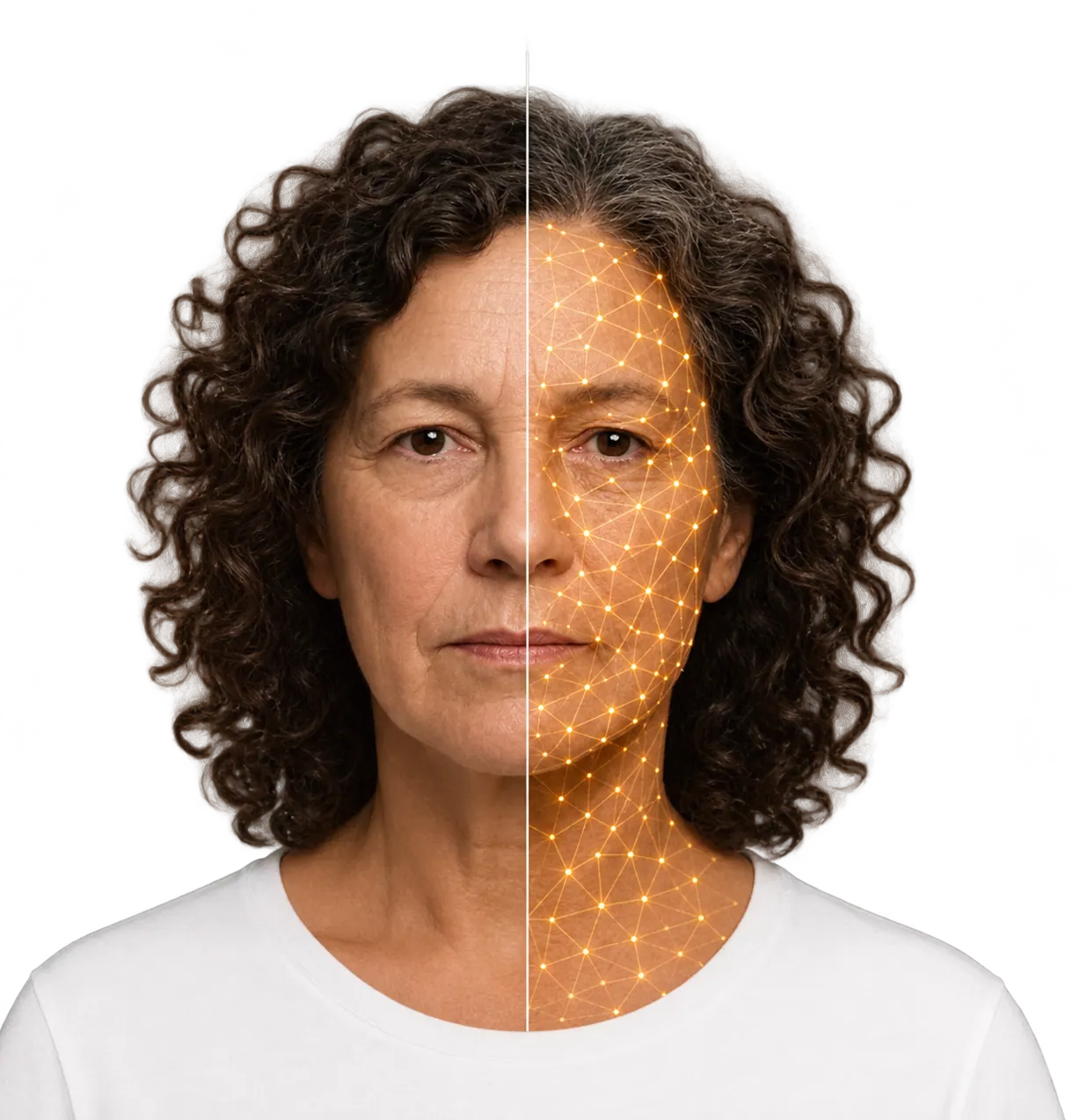
The Challenge
Treatment choices are still made for the average patient
Two patients with the same diagnosis can have very different disease biology, and too many go through rounds of trial and error before finding a treatment that works for them. Detailed molecular profiling at every visit isn’t realistic. The question in the clinic is simpler: which molecular subgroup does this patient belong to, and what does that mean for their treatment?
- Same diagnosis, different biology
- Trial and error
- Profiling isn't routine
Intended workflow
From a blood sample to a ranked, traceable report
*Illustration of the intended workflow. Mavatar Precision is in development, and its final intended use is defined in our regulatory plan.
Blood sample
Selected protein biomarkers are measured from a standard blood test at the local clinical lab.
Avatar match
The patient is matched to a pre-computed medical avatar built from real patient data, and approved treatments are evaluated in silico against its disease biology.
Ranked report
The oncologist receives ranked treatment options with a traceable rationale.
The oncologist decides
Precision supports clinical judgment and never replaces it.
Medical avatars
Cancer twins, built once
A medical avatar, our form of digital twin, is a molecular model of a patient subgroup. It’s built from single-cell RNA sequencing data from real patients in public data sources. Patients who resemble each other molecularly are grouped together, because they are likely to share the same disease biology. Every new public single-cell dataset adds patients to the library and sharpens the subgroups, with no new experiments needed.
Dysregulation is traced to the cell types that carry it.
How cells signal to one another, capturing mechanisms that exist only between cells.
The tissue-specific gene-to-gene wiring that the subgroup’s disease changes are projected onto.
The active targets of every approved compound are placed on that network, and their proximity to dysregulated genes is assessed statistically.
A drug acting on the right genes in the wrong direction can make a patient worse, so only compounds whose mechanism opposes the subgroup’s changes are ranked.

Evidence
Evidence first
Mavatar Precision is being developed together with clinical research partners in Sweden, and our results are shared through peer-reviewed publications and scientific congresses. Our core principles and foundation of methodology are grounded in:
- Peer-reviewed · Genome Med, 2019Prioritized drug worked in vivo. Bezafibrate, prioritized from a digital twin model, cut arthritis severity from a median score of 1 to 0. P < 0.05. (opens in a new tab)
- Peer-reviewed · Genome Med, 2024Rankings differ per patient. Adalimumab ranked #15.5 in an anti-TNF responder vs #658 in a non-responder (11 patients; retrospective). (opens in a new tab)
- Internal benchmark · UnpublishedDrug rankings aligned with independent wet-lab evidence. In an independent ~6,700-compound SARS-CoV-2 screen, experimentally active drugs ranked significantly higher than chance — across all matched compounds (P = 0.012) and in the top 30 predictions (P = 0.011).
- Internal benchmark · UnpublishedStratification holds in cohorts we did not build. Across nine cohorts we obtained a mean AUC of 0.73. Although biomarkers were selected from transcriptome profiling, a distilled four-protein panel separated an independent biobank cohort (P < 2.2×10⁻¹⁶).
First focus areas
Starting with four cancers
Disease models are being developed and validated first for breast cancer, lung cancer (NSCLC), colorectal cancer and melanoma. The same foundation can be extended to more cancer types over time.

One of the greatest challenges in breast cancer care is that we still cannot reliably predict which treatment will work for each individual patient. If we can move from population-based treatment decisions to biology-driven decisions before therapy begins, we have the opportunity to improve outcomes for patients while avoiding unnecessary treatments.