
Computational biology as risk reduction in pharma R&D: an interview with Danuta Gawel
Why programs still reach Phase II on limited evidence, and four things R&D leaders can change on Monday.
By Camila Guerrero De Blois, PhD ·
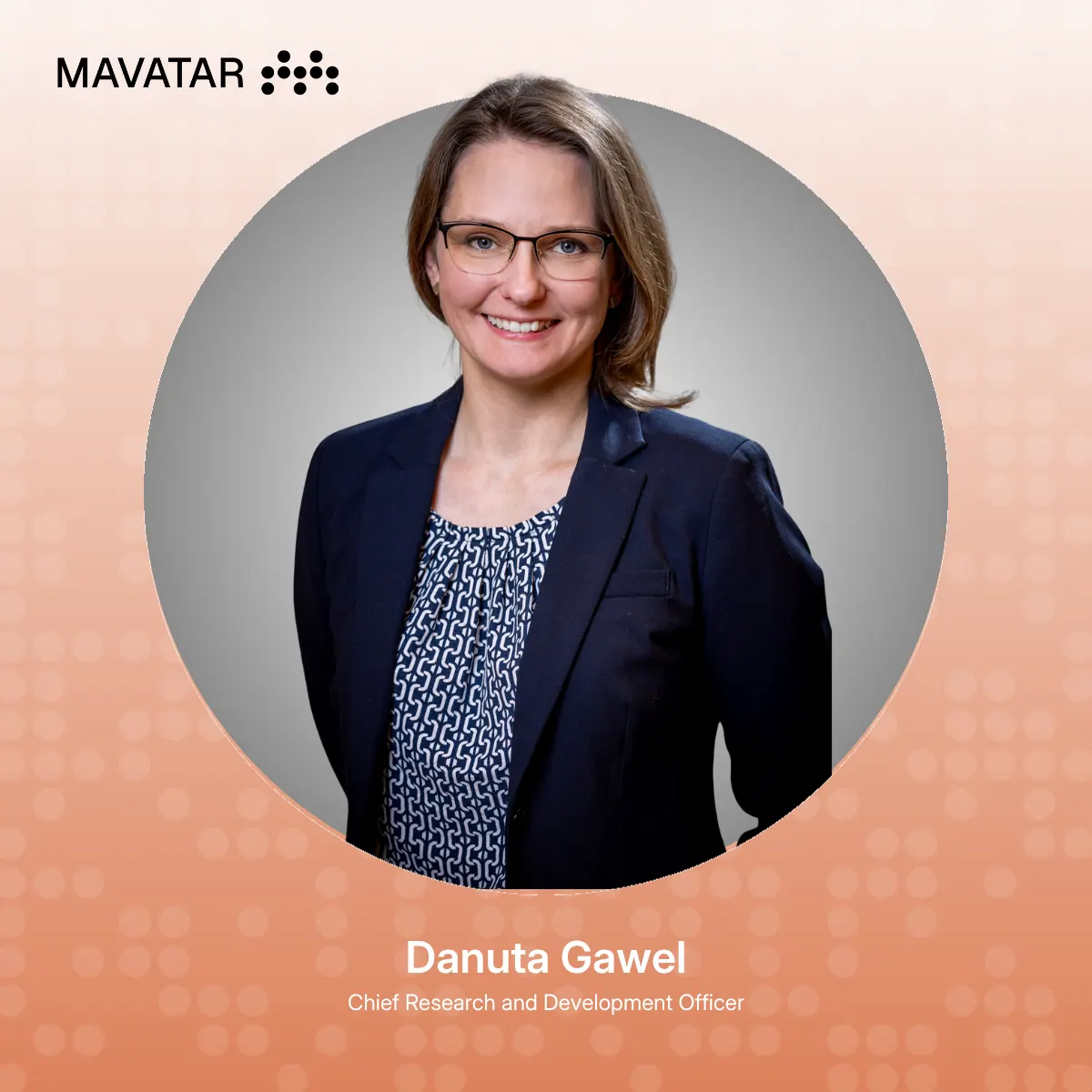
The evidence is already there. Most programs just aren't set up to see it.
A conversation with Danuta Gawel, Chief Research and Development Officer of Mavatar, on why computational biology has become a risk-reduction instrument in pharmaceutical R&D — and why the industry still under-buys it.
An interview by Camila Guerrero, PhD, Scientific Affairs Lead at Mavatar

Current landscape in drug-discovery
Let's start with the hard question. Pharma has spent twenty years trying to make drug discovery faster and more efficient, but the rate at which drug candidates fail has barely improved. What's actually going wrong?
I think we are still constrained by an older way of thinking about disease, answered Gawel.
We all understand that one disease, one tissue, one target, or one cell type represents only part of the biological picture. But at the same time, there is still a tendency to assume that taking a broader view will make the problem too complex, too expensive or simply too difficult to act on. Historically, that reduction was necessary. We had to simplify biology into something we could measure and test: a mechanism, a target, a tissue, a cell type. And that approach has given us many excellent medicines. The problem is not that it was wrong, but that it captured only part of the bigger picture.
The consequences of that limitation are visible in how different patients respond to treatment. In its report on personalized medicine, the FDA highlighted data showing that, depending on the therapeutic area, commonly used drugs may be ineffective in roughly 38 to 75 percent of patients. That is a striking reminder that a treatment can be highly effective for some patients while providing little or no benefit to others. The challenge is not that we simplified biology. We had to. But today, we still too often make very important decisions on limited evidence, even though we have the tools to see much more. We should use them.
Limited-evidence
You've used the phrase "limited evidence" quite deliberately. What do you mean by it?
I mean evidence that can be completely valid, published, and peer-reviewed, but still represent only a limited part of biology needed to support the decision. Take a typical target dossier, the package of evidence assembled to justify going after a given target. It might include genetic evidence, a knockout mouse model, in vitro experiments, and a literature narrative. Each of those pieces is important. But the question is whether, together, they tell us enough about what happens in the patients we actually want to treat. How consistently that mechanism is present, how important that target is within the broader disease network.
There's also another limitation. The published literature isn't a random sample of biology. It's a sample of what got funded and published. Today, we have the possibility to go beyond that by learning directly from the underlying data generated across thousands of experiments, including evidence that may never have been central to a published conclusion. We can then ask a very useful question: does a target hypothesis remain strong when we evaluate it against this much broader, data-driven view? Sometimes it becomes stronger. Sometimes the evidence is much more context-dependent than the literature alone would suggest. To me, both outcomes are valuable. That's an honest, measurable statement about how much of your confidence came from biology and how much came from what happened to get cited over the years. Very few dossiers report anything like that.
The data-driven alternative
So, what does a data-driven alternative look like in practice?
Concretely, it means using the full power of the transcriptome — the complete picture of which genes are active, and how strongly, in a given tissue or cell type. Instead of using it only to validate a predefined target, we can look at how genes change together and organize those patterns into networks. This systems-biology approach helps us identify key regulators, cell types, potential intervention points, and assess much earlier how strongly a target is supported — not in isolation, but in the context of the relevant tissue, disease and broader biological processes.
For example, we can score a cell type by how central it is to communication within the disease network — so being connected to other important cells matters more than simply having many connections. We can assess a drug by how close its targets are to the disease-related part of the network, and whether its pharmacological action actually counteracts the changes we observe in disease rather than simply interacting with a relevant protein. None of this is complicated mathematics. It is based on established approaches such as network theory and permutation statistics. What's new is that we can now run it on real patient-derived data at cellular resolution and at a scale that simply was not possible ten years ago.
Defining target de-risking
R&D leaders hear “de-risking targets” a lot and discount it. How do you quantify "de-risked"?
I think they are right to be cautious about that term. It has been used loosely, sometimes with more promise than evidence behind it. For us, de-risking does not mean claiming that an algorithm can guarantee success. It means increasing our confidence in the biological hypothesis before the most expensive decisions are made. One way to do that is to ask whether the signal is reproducible across different patient cohorts, technologies, laboratories, and experimental conditions.
That matters because laboratory research is, by design, highly controlled. We standardize protocols, reduce variability, and try to isolate the effect we want to study. But real patients are not standardized. They differ in age, genetics, lifestyle, environment, sleep, stress, diet, infections, medications, and countless other factors. It’s a mess. A robust biological signal has to survive some of that mess.
So, the differences between laboratories, technologies and experimental protocols — which are often treated as noise or confounders to eliminate — can actually be used to our advantage. From a de-risking perspective, they become an stress-test. If the same biological pattern emerges repeatedly despite those differences, our confidence that it reflects something fundamental about the disease becomes much stronger. And that is what we mean when we talk about de-risking targets or biomarkers: stress-testing the biological hypothesis against variability before making an expensive development decision.
The cost of late biomarkers
There's a figure that speaks directly to that. In a recent review by Bender et al. in Nature Reviews Drug Discovery (2026), the authors model the capitalized cost per successful drug launch and find that programs using biomarkers to match drugs to the right patients come in at roughly half the cost of programs that don't. In the same figure, they model a twenty percent improvement in speed, cost, or failure rate at every stage of discovery and development, and reducing failure at Phase II dominates everything else. If the arithmetic is that unambiguous, why do so many programs still arrive at Phase II without a biomarker?
That paper is worth reading closely. If we look at the biomarker panel first, for example, the comparison is over roughly twenty-one thousand compounds from commercial candidate databases between 2000 and 2015, with the cost of capital set at eleven percent. And the crucial modelling assumption is that the cost per trial is held constant. So, the reduction is coming entirely from higher success rates in the clinical phases, plus the effect that has on all the capital invested in the preceding phases. The authors also point out that, in practice, cohort sizes also may decrease when patients are stratified, so the real-world saving could be even greater.
The part that is easy to underestimate is compounding. Money spent early keeps carrying the cost of capital throughout the years of development. At eleven percent a dollar spent in lead optimization carries about three and a half dollars of weight by the time the drug reaches approval. That's why a Phase II failure is so costly: it is not just the Phase II budget that is lost; it includes every dollar you spent in the eight years before it. Which is exactly what the other panel of that figure shows — reducing Phase II failure has a much bigger financial impact than reducing costs or development time elsewhere.
Trial clinical data point in the same direction. BIO's analyses report a likelihood of approval from Phase I at around twenty-six percent for programs with patient-selection biomarkers versus around eight percent without, and their later 2011–2020 update still found roughly double, again concentrated in Phase II. Knowing who and why before Phase II is worth more than anything you can optimize afterwards. So, going back to your question. Why doesn't everyone do it?
I do not think the main reason is skepticism about the value of biomarkers. More often, it is a question of timing and available biological understanding. At the point when biomarker strategy becomes a priority, the program may already be quite advanced, and the data needed to define the right patient population may not have been collected. That is why I think biomarker thinking should start much earlier. During target selection, we are already asking which mechanisms are active, in which tissues and cell types, and in which groups of patients. Those same analyses can begin to generate hypotheses about who is most likely to respond and what molecular signals could identify them. And importantly, doing this early is relatively inexpensive. At that stage, the program is usually still flexible: you can collect the right samples, design the right experiments and refine the responder's hypothesis before major clinical investments are made. Changing direction seven years later becomes incomparably more expensive.
Moreover, at the early stage, the goal is not to have the final biomarker strategy defined. It is to have a clear, biologically grounded hypothesis that can be tested and refined as the program develops. For me, the solution is partly procedural. I think patient stratification should be considered alongside target selection rather than treated only as a later clinical-development question. The earlier we begin asking who is likely to benefit, the more opportunity we have to collect the right data, test the hypothesis and reduce uncertainty before the program becomes too expensive to change.
Patient-stratification
Patient stratification is the other half of that. What does systems biology tell you that a conventional subgroup analysis doesn't?
It can help us understand why the subgroups exist in the first place. That's what lets you identify them in advance, instead of searching for them in the data after the trial has already failed. One thing that has strongly influenced how I think about non-response is that the presence of the target itself may simply be not enough. Two patients can have the same diagnosis, receive the same targeted drug, and both show dysregulation of that target — yet respond very differently. When we look at the wider map of co-expressed genes — the gene network around that target — we may find that in one patient the target is central to the disease process, while in another there are alternative regulators capable of driving much of the same downstream biology. Blocking the target may therefore have very different consequences in those two systems. That changes what we might want to stratify on. Instead of asking only whether the target is present or dysregulated, we can look at the broader combination of active regulators and the network state around it.
So, systems biology has the potential to move stratification from describing who responded to understanding why certain patients are more likely to respond. And that may also help us reconsider some apparent drug failures — not necessarily as evidence that the drug had no biological effect, but that the relevant mechanism may only have been dominant in a subset of the patients treated.
Drug repurposing
Which brings us to repurposing. Is that a real and serious scientific strategy?
Absolutely. Repurposing is a particularly powerful and exciting application of systems biology. Here, we have the advantage of not starting from an unknown compound. We already have drugs with characterized human targets, known pharmacological effects and, in many cases, substantial information about safety and exposure. The remaining question is whether the mechanism of an existing drug matches the biology of a different disease. Here again, we can use the disease network model — essentially, a map of how genes are co-expressed in a relevant tissue or disease context — to ask which drugs act close to the disease-relevant part of that network, whether that proximity is greater than we would expect by chance, and, importantly, whether the drug's effect is predicted to counteract the molecular changes we observe in the disease.
We can also look at the problem from another direction. We can compare diseases and ask whether genes involved in key biological processes are connected and co-orchestrated in similar ways. We can examine whether a drug targets disease-specific gene wiring, how central its targets are within the disease network and, when we have cellular information, which cell types are most affected. I have seen a nice example of this in my own research. In one of our studies, a network-based analysis of inflammatory arthritis identified amrinone — a drug used for heart failure — as a potential treatment candidate. It was certainly not an obvious arthritis drug from a therapeutic-area perspective, but it emerged from the underlying disease biology. We then tested it experimentally in an arthritis model and saw a reduction in inflammation and bone erosion. That is exactly what makes repurposing so exciting to me: it can point you towards hypotheses that you might never have reached by staying within the traditional boundaries of a disease area.
Where it breaks
What's the failure mode of this whole approach? Where does it break?
The first thing I would say is sampling. You have to make sure that your model is actually the biology you want to understand. No computational method can rescue a model built on the wrong biological compartment. Let me explain this further.
We have seen this clearly in our own work. In one of our multi-organ single-cell studies of inflammatory arthritis, the visible inflammation was in the joints, but we found extensive molecular changes across all the organs we analyzed. So, the biology was not confined to the visibly affected tissue — different compartments were capturing different aspects of the same disease process. That is the key point. If you analyze only the compartment that is easiest to access, you need to understand what that compartment is actually telling you. Blood, for example, can be extremely informative, but it may reflect a systemic response to disease rather than the biology occurring directly at the site of pathology.
There's a physiological reason for that: the body works hard to keep inflammatory responses local, because systemic ones can kill you. Before building a sophisticated model, you have to make sure that the samples you use are actually capable of answering the biological question you are asking. The other honest failure modes: interactomes can be incomplete and biased; mRNA and protein don't correlate perfectly, and drug-target pharmacology in public databases is patchier than one would hope for.
Those are not reasons not to use the methods, but they are reasons to be honest about uncertainty and to validate important findings independently. For me, the principle is simple: make sure the input represents the biology you want to study, understand what each data layer can and cannot tell you, and never let one result carry the entire conclusion.
Why we built a platform
A lot of what you're describing needs deep computational infrastructure. Most groups doing the underlying biology don't have it. Is that why you built a platform?
Yes, absolutely. There is excellent computational and bioinformatics expertise in both academia and pharma. The challenge is that not every research group has access to those resources, and even when the expertise is there, building this kind of infrastructure from scratch takes a huge amount of time and effort. Very quickly, a large part of the work can go into building and maintaining the analytical machinery rather than answering the biological question itself. That was one of the main reasons for building the platform: we wanted to make these approaches much more accessible and reusable, so that researchers do not have to rebuild the same infrastructure every time they want to ask a new question.
And that connects directly to our mission: to revolutionize the understanding and treatment of human diseases and make precision medicine a reality for all. We do that in two ways. For pharma, we work through collaborations and can support the full analytical journey — from designing the analysis and building the disease model to critically interpreting the results — so that the findings can be translated seamlessly into informed development decisions. For academic researchers, the platform is about giving them access to the same analytical capabilities in a way that lets them focus on what they love doing: exploring the biology, testing hypotheses, following unexpected findings and extending their questions into other diseases or biological contexts.
The role of machine learning
You're a computational biologist heading science at a precision medicine company. Where is machine learning genuinely applying here?
Machine learning has become a constant companion in my work. One place where it is particularly powerful is prioritization and classification. Biological search spaces become enormous very quickly: tens of thousands of genes, many different cell types, thousands of drugs and an almost impossible number of potential relationships between them. Machine learning helps us find structure in that complexity, stratify patients into biologically meaningful groups, and build classifiers that can support biomarker identification and patient selection.
Some of its most important applications are actually much less glamorous. We use computational learning methods to reduce noise, correct technical differences between datasets, identify cell types, and make data generated in different experiments more comparable. A batch effect you didn't correct will happily present itself as a disease signature downstream. Those steps are fundamental — if you mistake a technical effect for a biological signal, everything you build on top of it can be misleading.
Where I become more cautious is when a model produces a very confident answer without giving us a way to judge how meaningful that answer actually is. I want to know what we would expect by chance, whether the result is reproducible, and what biological evidence supports it. And I do not think machine learning replaces mechanism. Ideally, it helps us formulate better, testable hypotheses: this regulator, in this cell type, may be driving these downstream changes. Then somebody can go into the lab and test it — but now they are testing a small number of well-prioritized hypotheses with a biological rationale behind them, rather than facing an overwhelming space of possibilities. For me, that ability to challenge and potentially falsify a prediction is still fundamental to the scientific process.
The next ten years
Paint the futuristic picture, then. Ten years out — what does a drug program look like?
I think — and I hope — that in ten years we will stop treating everyone with the same diagnosis as biologically the same patient. For me, the real shift would be to make drug development much more personalized from the very beginning. That means starting a program not only by asking what target should we pursue? But also in which patients is this biology actually active, who is most likely to benefit, and who probably should not receive this drug at all ?— even if they all entered the program with the same diagnosis.
That would be valuable for pharma because better patient matching should reduce failure later in development. If you invest more effort early in building a strong disease model and understanding patient heterogeneity, you enter clinical trials with a much clearer hypothesis about who the drug is actually for. That, in turn, will increase the chances of success. Those disease models could increasingly be built from real human data across tissues, cell types, and disease stages. Target selection, biomarker development, and patient stratification could then evolve together rather than being treated as separate questions. We could ask not only whether a target is involved, but how central it is, what other pathways might compensate when we block it, and whether combination treatment may be needed in a particular biological context.
But the benefit goes far beyond development cost. It could also reduce the burden on healthcare systems. Today, many patients return to the clinic repeatedly because the first treatment does not work, then try another, and perhaps another. Better matching of treatment to biology would reduce that trial and error. And most importantly, there is a person at the end of all of this. Someone is suffering, and someone needs the right treatment. That person may be us, our family, or someone we care about. So I think it is in all of our interests to move away from treating the “average patient” and towards understanding the individual biology much earlier. Longer term, I can imagine increasingly individual computational models — models that integrate what we know about that patient, their disease and can be updated as the disease changes. We are not there yet, and this will require careful prospective validation. But I think the direction is clear: invest more in understanding the patient early, so that fewer decisions later are made by trial and error.
And if we are painting a futuristic picture, I would also advocate for much larger biobanks and much tighter collaboration between academia, pharma and healthcare. The potential of learning from data that has already been generated is enormous, but those datasets still represent only a fraction of the population. They reflect which diseases, patient groups, and geographies have been studied, funded and sampled, and that inevitably introduces bias. If biobanking efforts expand — with better representation across populations, longitudinal sampling and closer links between molecular data and clinical outcomes — our models should become much more informative and our predictions more reliable. Yes, the complexity will grow. But so will the possibilities. The more diverse and representative the data become, the better chance we have of understanding not just the average disease, but the many different biological versions of it that exist in real patients.
Four things to change
Final question. An R&D leader reads this on Monday morning. What do they change?
I would suggest four things, in order of how much they cost. First, bring patient stratification much earlier. At candidate selection, already have a clear, testable hypothesis: which patients do you expect to benefit, what biology defines them, and in which tissue should you be looking for it? It does not have to be the final biomarker strategy, but it should be biologically grounded and testable. Second, ask where computational biology sits in the decision process. Is it being used upstream, when it can still challenge a target or change the direction of a program, or downstream, when the major decisions have already been made? I would put it quite strongly: if the analysis has never killed a project, it isn't doing analysis, it's doing marketing. Negative evidence has value. Sometimes the best outcome of an analysis is deciding early not to spend the next several years pursuing the wrong hypothesis.
Third, invest early in the right samples. Compared with the capital required to take a drug through development, obtaining the right tissue from the right patients is a relatively small investment — but it can determine the quality of everything that follows. Whenever possible, think about paired samples, relevant tissue, longitudinal sampling, and patient heterogeneity before the program becomes difficult and expensive to change. Fourth, demand transparency from computational approaches. Ask what the result is being compared against, how robust it is across independent data, where the method fails, and what the negative results were, what are the limitations of the method itself. A convincing prediction is useful; understanding why you should trust it is what turns it into a sound investment decision.
And the meta-point: computational biology isn't a service line you buy at the end to make a story tighter. It is one of the cheapest ways to reduce uncertainty early, when changing direction is still affordable. Too often, we use it only once the program is already too expensive to change.
References
- This interview was developed with Danuta Gawel and drafted with the assistance of Claude Opus 5, working from her published research and the notes from our conversation. Every figure cited was checked against its primary source, and the final text was reviewed and approved by Camila Guerrero and Danuta Gawel.
About the author

Camila Guerrero De Blois, PhD
Scientific Affairs Lead, Computational Biology
Camila holds a PhD in Translational Research in Hematology-Oncology and trained in multiple myeloma clinical and translational research. Her expertise spans computational biology, bioinformatics, multi-omics data analysis, and oncology clinical research.